Key Takeaways
- The ACFT has 6 events scored 0–100 each, for a maximum of 600 points. You need at least 60 per event to pass.
- As of June 1, 2025, the ACFT was replaced by the AFT (Army Fitness Test). The Standing Power Throw was removed, making it 5 events with a 500-point max.
- Combat MOSs (21 specialties including 11B, 12B, 18-series, 19-series) now require a sex-neutral standard of 350 total.
- Our calculator below uses official scoring tables and supports all age groups and both genders — with real-time results.
- ACFT scores recorded before May 31, 2025 remain valid for promotion until September 30, 2025.
- No administrative action for AFT failures until January 1, 2026, giving Soldiers time to adapt.
What is the ACFT?
The Army Combat Fitness Test (ACFT) is the U.S. Army's physical fitness assessment that replaced the decades-old APFT (Army Physical Fitness Test) in October 2020. Unlike the old three-event APFT, the ACFT was designed to measure combat-relevant fitness through six functional events that mirror actual battlefield demands [1].
Here's what you need to understand: the ACFT isn't just a PT test. It was built from the ground up based on data from nearly one million fitness assessments and research by RAND Corporation. Every event connects directly to tasks Soldiers perform in combat — from lifting casualties (deadlift) to reacting to contact (sprint-drag-carry) to sustaining operations over time (two-mile run) [2].
The six ACFT events are:
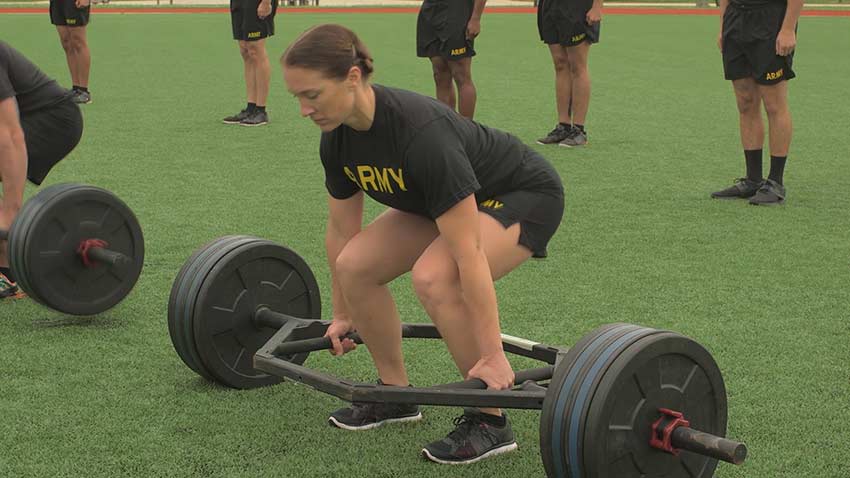
- 3-Repetition Maximum Deadlift (MDL) — Lower body and grip strength
- Standing Power Throw (SPT) — Explosive power and balance
- Hand-Release Push-Up (HRP) — Upper body endurance
- Sprint-Drag-Carry (SDC) — Anaerobic power, agility, and muscular endurance
- Plank (PLK) — Core strength and endurance
- Two-Mile Run (2MR) — Aerobic endurance
Each event is scored from 0 to 100 points based on age- and gender-normed tables, giving a maximum possible score of 600 points. The minimum passing standard is 60 points per event [3].
ACFT vs AFT: What Changed in 2025
On June 1, 2025, the Army officially transitioned from the ACFT to the Army Fitness Test (AFT). If you're still hearing both names, that's normal — it takes time for terminology to catch up with policy. Here's exactly what changed and what it means for your score [1]:
| Feature | ACFT (Before June 2025) | AFT (June 2025+) |
|---|---|---|
| Events | 6 (MDL, SPT, HRP, SDC, PLK, 2MR) | 5 (MDL, HRP, SDC, PLK, 2MR) — SPT removed |
| Max Score | 600 (6 × 100) | 500 (5 × 100) |
| Scoring Model | Age & gender-normed tables | General: age & gender-normed. Combat: sex-neutral, age-normed |
| General Passing | 60 per event, 360 total minimum | 60 per event, 300 total minimum |
| Combat MOS Standard | MOS-based tiers (Heavy/Significant/Moderate) | 21 combat MOSs: 60 per event, 350 total (sex-neutral) |
| Why SPT Removed? | — | Technical nature and injury risk per RAND analysis |
| Alternate Events | Available for profiles | Same — walk, bike, swim, row (Go/No-Go) |
| Scorecard | DA Form 705-TEST | Updated DA Form 705-TEST + DTMS integration |
- June 1, 2025: AFT becomes official test of record
- January 1, 2026: Combat MOS scoring standard takes effect for Active Component
- June 1, 2026: Combat MOS standard takes effect for Reserve and National Guard
Bottom line: if you're an active-duty Soldier in a combat MOS, you need to be hitting 350+ on the new 5-event scale starting January 2026. Everyone else needs 300+. Our calculator below still includes all six ACFT events so you can track your full fitness picture, and it flags the new AFT standards automatically.
ACFT Score Calculator
Enter your raw performance for each event. Scores update in real-time based on official Army scoring tables.
How to Use This ACFT Calculator
Getting your score is straightforward. Here's the step-by-step:
- Select your gender — This determines which scoring table applies. Male and female Soldiers have different scoring curves for most events.
- Choose your age group — The Army uses 10 age brackets from 17-21 through 62+. Scoring scales adjust slightly by age to account for natural physiological differences.
- Enter your raw scores for each event:
- MDL: Enter the weight in pounds of your heaviest successful 3-rep set
- SPT: Enter the distance in meters of your best throw
- HRP: Enter the number of correct reps completed in 2 minutes
- SDC: Enter your time in minutes and seconds
- PLK: Enter your hold time in minutes and seconds
- 2MR: Enter your run time in minutes and seconds
- Review your results — The calculator instantly shows your per-event points, total score, pass/fail status, and which MOS categories you qualify for. It also shows your projected AFT score (without the SPT).
ACFT Scoring Standards by Event
Understanding what each event tests and how it's scored will help you train smarter. Here's the complete breakdown based on FM 7-22 and official Army guidance [4]:
1. 3-Repetition Maximum Deadlift (MDL)
What it tests: Lower body, grip, and core muscular strength. This directly simulates lifting heavy equipment, casualties, and supplies.
How it works: You perform 3 continuous deadlifts using a 60-pound hex bar loaded with weight plates. You get up to 2 attempts — if you complete 3 reps on the first attempt, you can try a higher weight. If you fail, you can retest once at a lower weight.
Equipment: 60-lb hex (trap) bar, weight plates in 10-lb increments.
Scoring range: 60 points at 140 lbs (male 22-26) up to 100 points at 340 lbs.
2. Standing Power Throw (SPT)
What it tests: Explosive power, balance, and coordination. This simulates throwing equipment, pushing obstacles, and generating force quickly.
How it works: You throw a 10-pound medicine ball backward over your head for maximum distance. You get two attempts — the better throw counts.
Equipment: 10-lb medicine ball.
Note: The SPT was removed from the AFT effective June 1, 2025, due to its technical nature and injury risk. However, it remains part of historical ACFT scoring.
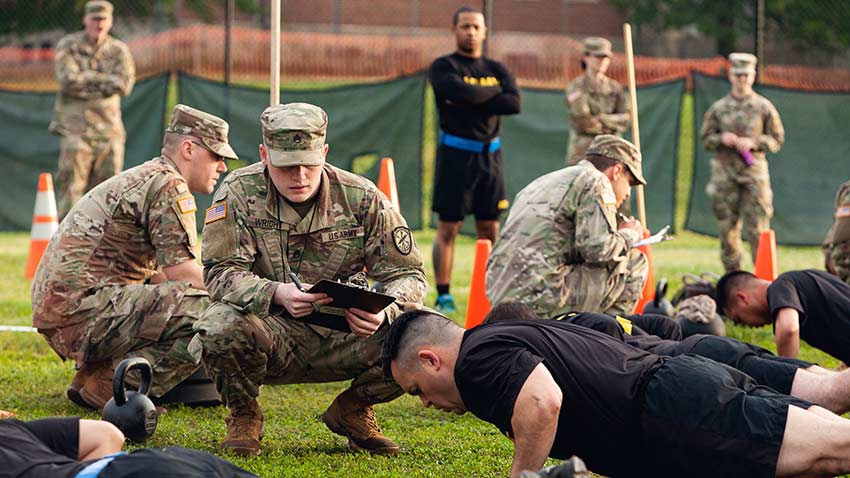
3. Hand-Release Push-Up (HRP)
What it tests: Upper body muscular endurance and core stability. Simulates pushing obstacles, getting up from prone, and hand-to-hand tasks.
How it works: From the prone position, you push up to full arm extension, lower yourself back down, then extend your arms out to the sides (T-position) before bringing hands back and repeating. You have exactly 2 minutes to complete as many correct reps as possible.
Equipment: Level surface only.
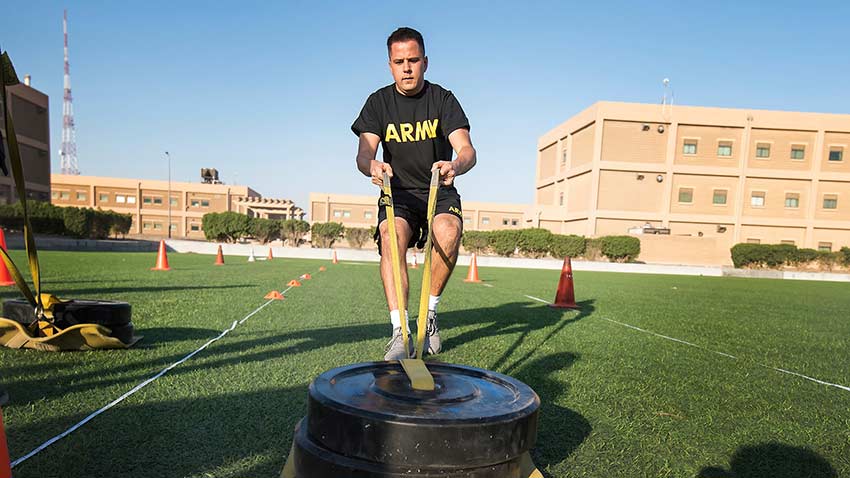
4. Sprint-Drag-Carry (SDC)
What it tests: Muscular endurance, anaerobic power, agility, and reaction time. This is the most combat-relevant event — simulating casualty evacuation, ammunition resupply, and reacting to contact.
How it works: Five consecutive 50-meter shuttles: sprint, sled drag (90 lbs), lateral shuffle, kettlebell carry (2 x 40 lbs), and final sprint. The clock runs continuously.
Equipment: 90-lb sled with pull straps, two 40-lb kettlebells.
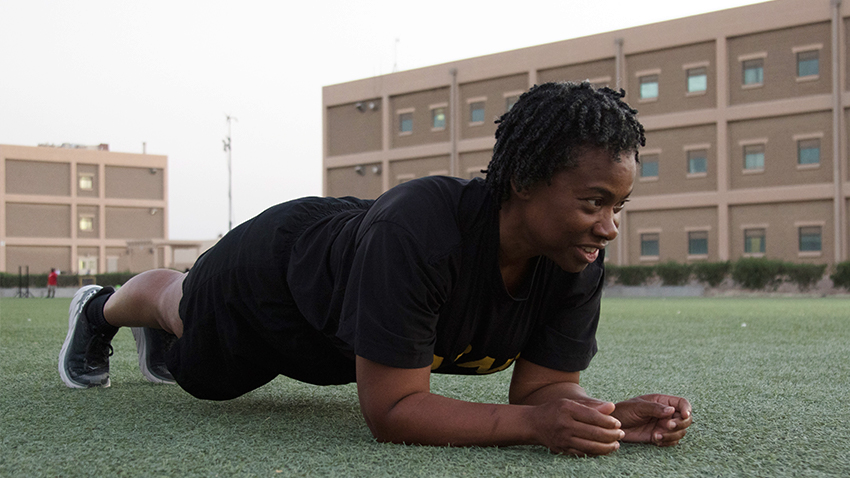
5. Plank (PLK)
What it tests: Core muscular endurance, stability, and balance. Replaced the Leg Tuck as the primary core event in ACFT 3.0.
How it works: Hold a proper plank position (forearms and toes on ground, body in straight line from head to heels) for as long as possible. One verbal warning is given for form breaks. Second break or inability to maintain position ends the event.
Equipment: Level surface only.
6. Two-Mile Run (2MR)
What it tests: Aerobic endurance — the ability to sustain physical activity and recover during extended operations. This is often the event that separates a good score from a great one.
How it works: Run two miles on a measured, generally flat course. Indoor or outdoor tracks and improved surfaces (roads, sidewalks) are authorized. Unimproved terrain is not.
Equipment: Measured two-mile course.
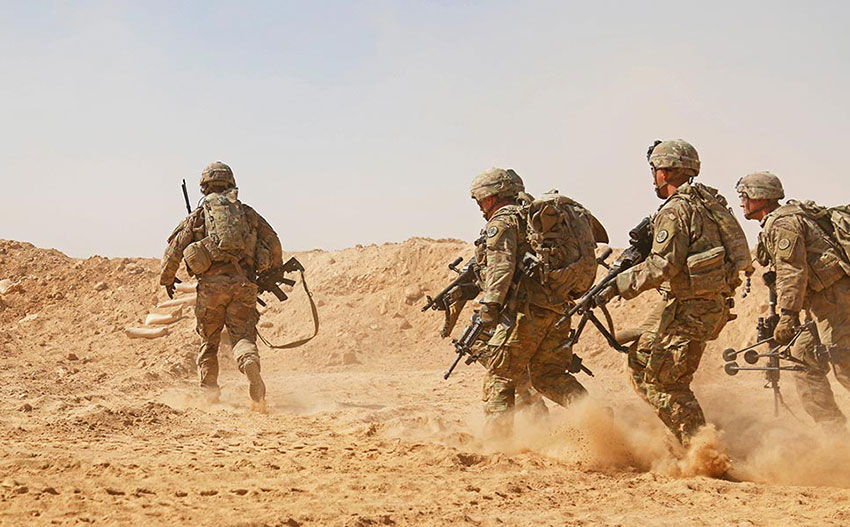
ACFT Score Chart — Quick Reference
This table shows the minimum (60-point) and maximum (100-point) raw performance values for each event across age groups. Use this as a quick reference alongside the calculator above. Full scoring tables are available in the official AFT Scoring Scales PDF [3].
Male Scoring Standards
| Event | Pts | 17-21 | 22-26 | 27-31 | 32-36 | 37-41 | 42-46 | 47-51 | 52-56 | 57-61 | 62+ |
|---|---|---|---|---|---|---|---|---|---|---|---|
| MDL (lbs) | 100 | 340 | 340 | 340 | 340 | 340 | 340 | 330 | 290 | 250 | 230 |
| 60 | 140 | 140 | 140 | 140 | 140 | 140 | 140 | 140 | 140 | 140 | |
| SPT (m) | 100 | 12.6 | 13.0 | 13.1 | 12.9 | 12.8 | 12.3 | 11.6 | 10.6 | 9.9 | 9.0 |
| 60 | 6.0 | 6.3 | 6.5 | 6.5 | 6.4 | 6.2 | 6.0 | 5.7 | 5.3 | 4.9 | |
| HRP (reps) | 100 | 57 | 61 | 62 | 60 | 59 | 56 | 55 | 51 | 46 | 43 |
| 60 | 10 | 10 | 10 | 10 | 10 | 10 | 10 | 10 | 10 | 10 | |
| SDC (m:ss) | 100 | 1:34 | 1:33 | 1:33 | 1:32 | 1:31 | 1:30 | 1:28 | 1:26 | 1:24 | 1:22 |
| 60 | 2:20 | 2:20 | 2:20 | 2:20 | 2:20 | 2:20 | 2:20 | 2:20 | 2:20 | 2:20 | |
| PLK (m:ss) | 100 | 3:40 | 3:35 | 3:30 | 3:25 | 3:20 | 3:20 | 3:20 | 3:20 | 3:20 | 3:20 |
| 60 | 1:30 | 1:25 | 1:20 | 1:15 | 1:10 | 1:10 | 1:10 | 1:10 | 1:10 | 1:10 | |
| 2MR (min) | 100 | 13:18 | 13:36 | 14:00 | 14:30 | 15:00 | 15:30 | 16:00 | 17:00 | 18:00 | 19:00 |
| 60 | 21:00 | 21:00 | 21:00 | 21:00 | 21:00 | 21:00 | 21:00 | 21:00 | 21:00 | 21:00 |
Female Scoring Standards
| Event | Pts | 17-21 | 22-26 | 27-31 | 32-36 | 37-41 | 42-46 | 47-51 | 52-56 | 57-61 | 62+ |
|---|---|---|---|---|---|---|---|---|---|---|---|
| MDL (lbs) | 100 | 210 | 230 | 230 | 230 | 210 | 210 | 190 | 190 | 170 | 170 |
| 60 | 120 | 120 | 120 | 120 | 120 | 120 | 120 | 120 | 120 | 120 | |
| SPT (m) | 100 | 8.4 | 8.5 | 8.7 | 8.6 | 8.2 | 8.1 | 7.8 | 7.4 | 6.6 | 6.6 |
| 60 | 3.9 | 4.0 | 4.2 | 4.1 | 4.1 | 3.9 | 3.7 | 3.5 | 3.4 | 3.4 | |
| HRP (reps) | 100 | 53 | 50 | 48 | 47 | 41 | 36 | 35 | 30 | 24 | 24 |
| 60 | 10 | 10 | 10 | 10 | 10 | 10 | 10 | 10 | 10 | 10 | |
| SDC (m:ss) | 100 | 1:43 | 1:42 | 1:41 | 1:40 | 1:39 | 1:37 | 1:35 | 1:33 | 1:31 | 1:29 |
| 60 | 2:20 | 2:20 | 2:20 | 2:20 | 2:20 | 2:20 | 2:20 | 2:20 | 2:20 | 2:20 | |
| PLK (m:ss) | 100 | 3:40 | 3:35 | 3:30 | 3:25 | 3:20 | 3:20 | 3:20 | 3:20 | 3:20 | 3:20 |
| 60 | 1:30 | 1:25 | 1:20 | 1:15 | 1:10 | 1:10 | 1:10 | 1:10 | 1:10 | 1:10 | |
| 2MR (min) | 100 | 15:42 | 16:00 | 16:18 | 16:42 | 17:12 | 17:42 | 18:12 | 19:00 | 20:00 | 21:00 |
| 60 | 21:00 | 21:00 | 21:00 | 21:00 | 21:00 | 21:00 | 21:00 | 21:00 | 21:00 | 21:00 |
What is a Good ACFT Score?
This depends on your goals, MOS, and where you are in your career. Here's some context based on Army-wide data:
- 360–400: Passing range. You meet minimum standards but have room for improvement. Focus on bringing up your weakest events.
- 400–450: Solid performer. You're in the upper-average range. Most Soldiers fall somewhere in this bracket.
- 450–500: Above average. You're competitive for promotion points and demonstrating strong fitness across all events.
- 500–540: Excellent. You're in the top tier and likely maxing several events. A 540 ACFT score typically earns around 110–120 promotion points.
- 540–600: Elite. You're approaching or hitting max scores across the board. A perfect 600 is exceptionally rare and requires dedicated, well-rounded training.
For promotion points, the ACFT is worth up to 180 points for enlisted Soldiers in the semi-centralized promotion system. That makes it one of the highest-value categories — right up there with weapons qualification and education [1].
ACFT Training Tips from Real Soldiers
Theory is nice, but you need practical advice from people who've actually graded and trained for this test. Here's what experienced NCOs and fitness trainers recommend:
MDL: Deadlift Training
- Train the hex bar specifically. A conventional barbell deadlift is not the same movement. The hex bar changes your center of gravity and grip angle. Practice with the actual equipment.
- Focus on hip hinge mechanics. Romanian deadlifts, hip thrusts, and sumo deadlifts build the posterior chain you need.
- Grip matters. Farmer's carries and dead hangs will prevent your grip from being the limiting factor.
HRP: Push-Up Strategy
- Pace yourself. Going all-out in the first 30 seconds and gassing out is the most common mistake. Aim for a sustainable rhythm — about 20-25 reps per minute.
- Practice the T-extension. The arm extension between reps takes time. A smooth, efficient extension saves seconds that add up over 2 minutes.
- Train incline bench and floor press for pushing endurance, plus band pull-aparts to keep your shoulders healthy.
SDC: The Event That Breaks People
- Transitions are everything. Practice the full sequence, not just individual components. The time between each lane is where most Soldiers lose seconds.
- The lateral shuffle is the weak link for many. Practice staying low with wide feet and quick steps. Don't cross your feet.
- Train with actual kettlebells and sled. Farmer's carries with 40-lb kettlebells and sled drags at least once per week.
PLK: Plank Endurance
- Train past your goal time. If you need 2:30, train to hold 3:00+ in practice. Test-day adrenaline and grader corrections will cost you time.
- Loaded carries build plank endurance better than just holding planks. Farmer's walks, suitcase carries, and overhead walks all build anti-extension strength.
- Focus on breathing. Slow, controlled breaths through the nose help maintain the position longer.
2MR: Running Smart
- 80/20 rule: 80% of your running should be easy aerobic pace, 20% should be quality intervals or tempo runs.
- Don't just run. Hill repeats, 400m intervals, and tempo runs at goal pace are more effective than grinding out slow miles.
- Know your splits. If your goal is 16:00, that's two 8:00 miles. Practice running 7:50-8:00 pace so race day feels comfortable.
For a comprehensive training program, download the official FM 7-22: Holistic Health and Fitness manual [4].
Common ACFT Mistakes (and How to Avoid Them)
After grading hundreds of ACFTs and coaching Soldiers through this test, here are the mistakes that come up again and again:
1. Only Training for the Test
The ACFT is a test, not a training program. Soldiers who only practice test events plateau fast. Train general fitness with compound movements, conditioning, and mobility — then test occasionally to measure progress.
2. Ignoring the SDC Transitions
Soldiers practice sprints, drags, and carries separately but never run the full sequence. On test day, the transitions between lanes eat up 10-15 seconds that you didn't plan for. Practice the full event, start to finish, at least twice per month.
3. Going Too Fast on Push-Ups
Reps 1-15 feel easy. Then the arm extension starts taking longer, your form breaks down, and the grader no-reps you. Start at a sustainable 20-25 reps/minute pace and hold it.
4. Not Practicing with the Hex Bar
The 60-lb hex bar handles differently than a barbell. The grip angle, standing position, and weight distribution are all unique. At minimum, do 3-4 sessions with the actual hex bar before your test.
5. Neglecting Recovery
The ACFT tests six different fitness components in sequence. Cramming heavy training into the week before your test is counterproductive. Taper your training — reduce volume by 40-50% in the final week while maintaining intensity.
6. Not Knowing the Standards for Your MOS
With the new AFT, your required score depends on whether your MOS is classified as combat or not. Know your standard before test day. Combat MOSs need 350 total (sex-neutral) — check the official AFT page for the full list of 21 combat MOSs [1].
Frequently Asked Questions
What is a passing ACFT score?
A passing ACFT score requires a minimum of 60 points in each of the six events, for a minimum total of 360 points. Under the old MOS-based tiers: Heavy required 440 total (70/event), Significant required 440 total (65/event), and Moderate required 360 total (60/event). Under the new AFT (June 2025+), the general standard is 300 total across 5 events, and combat MOSs require 350 total.
What is the difference between ACFT and AFT?
The AFT (Army Fitness Test) officially replaced the ACFT on June 1, 2025. Key differences: the Standing Power Throw was removed (now 5 events instead of 6), the maximum score is 500 instead of 600, 21 combat MOSs have a sex-neutral 350-point standard, and the general passing standard is 300 total. The remaining five events (MDL, HRP, SDC, PLK, 2MR) use updated scoring tables.
How many promotion points is the ACFT worth?
The ACFT/AFT is worth up to 180 promotion points for enlisted Soldiers competing in the semi-centralized promotion system (SGT/SSG boards). For example, a 540 ACFT score typically earns around 110-120 points. ACFT scores recorded before May 31, 2025 remain valid for promotion until September 30, 2025. After that, only AFT scores count.
What is a good ACFT score?
A score above 500 out of 600 is generally considered good. Soldiers scoring 450-500 are above average, while the Army-wide average tends to fall in the 440-460 range. For promotion competitiveness, aim for 500+ to maximize your points. A perfect 600 is exceptional and rare.
How often do Soldiers take the ACFT?
Active-duty Soldiers typically take the ACFT/AFT twice per year to maintain a current record test. Army Reserve and National Guard Soldiers are required to take it once per year. Commanders may schedule diagnostic (non-record) tests at their discretion for training purposes.
What happens if you fail the ACFT?
If you fail, you'll receive additional training support and must retest. Active-duty and AGR Soldiers must retest within 90 days; Reserve and Guard Soldiers within 180 days. For the AFT specifically, no administrative action is taken until January 1, 2026. Failing two consecutive record AFTs may lead to separation proceedings. Combat MOS Soldiers who fail the 350 combat standard but pass the 300 general standard may face reclassification.
How much does the ACFT hex bar weigh?
The standard ACFT hex (trap) bar weighs 60 pounds (27.2 kg) without any additional weight plates. Weight plates come in 10-pound increments. The minimum testable weight is the bar alone (60 lbs) and the maximum is typically limited by available plates, though scores above 340 lbs already earn maximum points for most age groups.
Can you wear gloves during the ACFT?
Yes, Soldiers are authorized to wear gloves during the MDL (deadlift) and SDC (sprint-drag-carry) events. Gloves are not authorized during the HRP (push-up) or PLK (plank) events. For the 2MR, standard issue running shoes are required. Check with your grader for specific local policies.
Is the Standing Power Throw still part of the test?
No. The Standing Power Throw (SPT) was removed from the test effective June 1, 2025, when the ACFT transitioned to the AFT. The Army removed it due to its technical nature and associated injury risk, based on RAND Corporation analysis. The test now has 5 events with a maximum score of 500.
What MOS codes require the combat AFT standard?
21 combat MOS/AOCs require the higher 350-point sex-neutral standard: 11A, 11B, 11C, 11Z (Infantry), 12A, 12B (Combat Engineer), 13A, 13F (Field Artillery/Fire Support), 18A, 180A, 18B, 18C, 18D, 18E, 18F, 18Z (Special Forces), 19A, 19C, 19D, 19K, 19Z (Armor/Cavalry). This standard takes effect January 1, 2026 for Active Component and June 1, 2026 for Reserve/Guard.
How long does the ACFT take to complete?
For an individual Soldier, the full ACFT takes approximately 50-55 minutes to complete all events including rest periods between events. At the unit level, testing an entire company with multiple lanes typically takes 2-3 hours. Events must be performed in order (MDL, SPT, HRP, SDC, PLK, 2MR) with prescribed rest periods.
Real Soldier Reviews & Experiences
We asked active-duty and veteran Soldiers about their ACFT experience. Here's what they had to say:
"The ACFT is a much better measure of combat fitness than the old APFT. I was a great runner but couldn't deadlift to save my life. The ACFT forced me to become a more well-rounded Soldier. My deadlift went from 180 to 280 in six months of focused training. Use a calculator like this to identify your gaps — then attack them."
"As a female officer in a combat support MOS, the transition from APFT to ACFT was tough. The deadlift and SDC were completely new to me. What helped most was finding an H2F coach who built a program around my weak points. I went from barely passing to scoring 480. The new AFT standard is cleaner — glad they dropped the SPT, that event was chaos."
"I'm 47 and a Reservist. The age-adjusted scoring is fair — it's challenging but achievable if you train consistently. My advice: don't try to cram fitness in the two weeks before drill. Train year-round, even if it's just 3 days a week. I use this kind of calculator monthly to track progress and make sure I'm staying above 400."
"Scored 578 on my last ACFT. The key was treating each event as its own training block. Monday: deadlift and SDC components. Wednesday: HRP and plank work. Friday: run day with intervals. Saturday: full mock test once a month. Consistency beats intensity every single time."
Sources & References
- U.S. Army. "Army Fitness Test." army.mil/aft. Accessed February 21, 2026.
- GoArmy.com. "Army Fitness Test & Requirements (AFT)." goarmy.com/how-to-join/requirements/fitness. Accessed February 21, 2026.
- U.S. Army. "AFT Scoring Scales (Effective June 1, 2025)." AFT_Scoring_Scales_250601.pdf. Approved May 15, 2025.
- Department of the Army. "FM 7-22: Holistic Health and Fitness." Army Publishing Directorate.
- RAND Corporation. Analysis of Army Combat Fitness Test performance data (referenced in Army AFT implementation guidance).
- U.S. Army. "Army Directive 2025-06: Army Fitness Test." Army Publishing Directorate, April 23, 2025.
- Military.com. "Army Poised to Raise Fitness Standards for Combat Arms Troops in 2025." December 31, 2024.